- Home
&
Summary - Debate
Democracy
Problems - Debate
Democracy
Solutions - Debate
Democracy
Exemples 1 - Debate
Democracy
Exemples 2 - The dangers
of the
extrem right - Europe and the autonomy question
- Human
face
Eco-socialism
The Author


« Socialism declares that the Political Republic (Democracy) should lead to the Social Republic (Democracy). » Jean Jaurès*
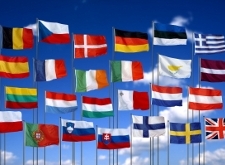 |
Europe and the autonomy question
Europe needs democratic reforms. A real democracy allows the left to carry out its policies with a simple majority, all this in the respect of human rights. What would they be? I consider myself an autonomist, neither a federalist nor a sovereignist. I want to unite while cultivating our differences. We must reject blocking rights at the national level. This includes all vetoes, including the veto of the Member States within the Council. In exchange, each national parliament would receive individual and collective rights. As for individual rights, a national parliament, on a project on which it disagrees, has the right to seek a compromise, while at the same time exerting pressure by delaying this project. As collective rights, the national parliaments, with the same electoral weight, for each nation, would form an assembly of nations. That is to say, an upper house in a bicameral European parliament. Procedures are also needed to ensure real autonomy for all Member States. With an autonomist majority in this House, it would be able to monitor the fact that the rights of national parliaments have been rigorously taken into account. The best thing to do is to write a constitution that creates a parliamentary regime that could actually legislate in the ecological, social and fiscal fields. An ambitious cultural exchange policy, which brings people together, while affirming their diversity, would be a good thing. It could either be written by a constituent assembly or by the European Parliament and be ratified by the Member States within 10 years. I think that a commission that is too strong would be a bad thing. Parliament is a much more democratic institution. It will take a compromise or consensus (even better) with the federalists on this subject. We must warmly welcome Ukraine to the Union, as well as to NATO.
If I had a wish, I would like these ideas to be discussed in European universities and on ARTE. I am also a member of the radical left movement, which wants a Democratic Europe, DIEM25.
A. A bicameral European Parliament
« It is through freedom and the growing scope of exchanges that human unity will gradually be achieved. » Jean Jaurès*
On the one hand, the European Union is sorely lacking in democracy. This gives way to a technocratic, which leads to a form of authoritarianism. On the other hand, democratic sentiment is currently a national reality. This may explain the low turnout in the European elections. The citizen feels that he belongs to a national whole. Whereas the European idea is beyond him.
To combat these problems, national entities representing the nations, as a whole, must be integrated into the European institutions. The most democratic entity for this are the national parliaments. Europe has a great need to integrate these national vestments into an upper chamber, which I would call the assembly of nations. Since the European Assembly (the single assembly of the former European Parliament) takes into account the population of the various nations, the Assembly of Nations must not take this into account. It's a question of balance. Let's say that each nation has 1000 points, which are distributed according to the votes for, against, blank and abstention. Each nation will have the same weight in the upper house.
We must renounce any national blockage, in all European institutions, and not only at parliamentary level. It is important that, in return, national parliaments, individually and collectively, have rights within a new parliament. This is not only a contra between Autonomists and Federalists, it is a contra between the European institutions, its nations and its citizens. As an individual right, on a project where a national parliament disagrees, he could have the possibility to propose a compromise and to exert pressure by delaying European decisions. These procedures should be exhausted after a reasonable period of time, such as a maximum of one year. And collectively, they would form an upper house, the assembly of nations.
As an example of individual rights, could be the possibility for a national parliament to propose amendments, before and after the vote of the assembly. After a positive vote, a national parliament could impose a second vote. I don't pretend to have all the answers, there should be a debate about which individual rights should be guaranteed.
B. Guarantees for real autonomy
« Chapelier found that the inadequacy of wages was a kind of slavery. » Jean Jaurès*
A homogeneous Europe would be a real horror. Could we not all live equal and all different? The idea of encouraging cultural exchanges is based on the same principle. But this will be seen in another paragraph. We have a base, common values. Our common ground is based on human rights. And together we are stronger. In this paragraph, I wanted to deal with guarantees for the autonomy of the Member States.
There are already the principles of subsidiarity and substitutes. I find that talking more about national and European competence is more elegant. The new European Parliament could assign an area of competence. But what happens if a national parliament rejects a European competence with a qualified majority?
If a national parliament votes against a European competence, by a qualified majority, the European Court of Justice can be seized. The Member State may withdraw, it is no longer concerned, by these powers, if the court finds that this act does not harm the objectives of the project, and that no other Member State is harmed.
Throughout parliament, the autonomist deputies could ensure that their principles are respected. If a decision made by the parliament or a commissioner (normally the commissioners are under the control of the parliament), violates these principles. If, for example, an amendment by a national parliament has not been sufficiently taken into account, the European Parliament can block this project. It will depend on the number of autonomist deputies.
C. The new constitution and its new possibilities
« It is quite true that the beauty of science and art is consoling. » Jean Jaurès*
I am rather in favour of a parliamentary regime with a constructive motion of censure (see German constitution). A commission that is too strong would be a bad thing. Parliament elects and defeats the commissioners. But in the event of a censorship, he must propose a replacement to the censored commissioner. For more stability, it would be preferable for the European Assembly to hold most of these powers, towards the Commissioners. Whereas the powers of the Assembly of Nations would be more specialised around the level of competences, European or national level. It is the parliament that is at the centre of power. This choice is more democratic and promotes the search for compromise and consensus. The role of the council would be nothing more than intergovernmental coordination.
For example, with a left-wing majority, LEA (Left European Autonomists), ecological, social, and fiscal issues (individual and multinational) are European competences. It is necessary to put into practice a real ecological policy, let's think about our future generations! Then we must put an end to the competition between workers in the European Union, which is not done at the bottom. We must level wages and working conditions upwards, with a substantial budget, with effective results. Secondly, we must fight against tax evasion and tax havens. As well as the blackmail that global finance exerts on our economies.
A LEA policy could also encourage cultural exchanges in Europe. It is by knowing one's own identity that we can open up to other cultures and other peoples. It's all about budget! The EU must provide a substantial budget for these projects.
The possibility of carrying out such policies is a test of democracy for the European Union. It must be credible and real. The economic dimension of the old treaties must therefore be able to be undone by a simple majority in the European Parliament. If this is not the case, Europe is not a democracy!
D. What constitution for the EU?
« It is by going towards the sea that the river remains faithful to its source. » Jean Jaurès*
The European Constitution must transcribe directives of an economic nature, as simple directives. They must be able to be amended by a simple majority. On the other hand, constitutional law must be able to be modified by a qualified majority. A constitution must be able to be modified. A social and ecological policy must be able to exist. When drafting this constitution, national parliaments will have to be involved.
I see two solutions for writing it. On the one hand, the convening of a constituent assembly during the European elections. Or the creation of a commission within the European Assembly, which will involve the national parliaments. Once a good compromise or consensus has been reached, it will have to be ratified by the Member States in a period of 10 years. After this period, the cases of countries that have not ratified it will have to be studied. Of course, fundamental principles must be said: a constitution can be amended, it has no economic aspect and only concerns the institutions. The parties not taken into account by the constitution become organic directives. Then it must be ratified by the Council of Ministers, the Commission and the European Parliament. This constitutional law must immediately guarantee new rights to national parliaments, as soon as it is ratified. We will switch to the new constitution after the approval of 80% of the nations. The ratification of the constitution by a Member State repeals the previous treaties during the changeover. This shift will leave only limited power (European Assembly) to the Member States that are still in the EU on all directives (even those resulting from previous treaties).
E. The autonomist project, the autonomists and the federalists.
« The first of human rights is individual freedom, freedom of property, freedom of thought, freedom of work. » Jean Jaurès*
The autonomist project, which is our constitutional project, can be supported by federalists. This is the goal before it is put into practice. For someone who believes in Europe, such a policy could be an end in itself. No doubt there could be a difference between the true federalists and the supporters of a common market. Support could take a dim view of the democratisation of the EU. They might be reluctant to remove this neoliberal straitjacket. It is important that the autonomist project, which will be the subject of compromise, or even consensus, has the widest possible support.
Once adopted, what will happen? What is the difference between autonomists and federalists? In this new Europe, the autonomists will pay more attention to ensuring that the principles of autonomy are respected. Whereas the federalists will favour common projects. This difference will be made electorally in the European Parliament as well as in the national parliaments.
F. To integrate Ukraine into the EU and NATO
« The Republic (democracy) is the right of every man, whatever his religious belief, to have his share of sovereignty. » Jean Jaurès*
On February 24, 2022, Putin's Russia invaded Ukraine, an independent country. This unacceptable act is a serious violation of international law. We must therefore support Ukraine with all our strength. A Russian victory would be a dangerous precedent. This could give rise to another imperialist war. In the face of these threats, we must not fall into unilateral pacifism. We have already seen what this produced in 1936, at the Munich Conference.
Ukraine paid the price in blood to enter the European Union and NATO. They are welcome. I hope for a victory from them. This would be the best way to defend international law and collective security in Europe. After that, we should, under the aegis of the UN, start discussions for international disarmament. Only negotiated and multilateral disarmament can lead us to a stable peace.
G. Conclusion.
« It is only through the free federation of autonomous nations, repudiating enterprises by force and submitting to the rules of law, that human unity can be achieved. » Jean Jaurès*
The people must take back power in Europe from the banks and big capital. We need new rules, we need the people to have real power. Europe must therefore become more democratic and truly democratic and parliamentary. Europe must become the expression of the will of its peoples, a bulwark against unbridled neoliberalism. Europe as it works is a swindle. In practice, it is not democratic at all. We must fight so that the people can finally govern it. It is the best bulwark against economic violence and anti-social competition. We must promote the individual and collective rights of national parliaments. Such as that no nation has the possibility to block a decision but in return it can seek a compromise and exerting pressure by delaying the project and collectively, form an upper house. No concessions on this point are acceptable. Let us give Europe back to the peoples and let us give life to the expression of the general will. And a European constitution must make explicit reference to the bold declaration of human rights.
To do this, we need a parliamentary system, with a bicameral parliament. The upper house would be nothing more than the pooling of national parliaments. This regime will also have to guarantee real autonomy to the Member States. The test of democracy will come when LEA (Left European Autonomists) will have a majority. An ecological, social and fiscal policy will become possible. But then how do you implement it? We can elect a constituent assembly. Or ask the current parliament, with the support of the national parliaments, to draft this constitution. We must also support Ukraine in the war that Putin has imposed on it. It must be warmly welcomed in the European Union and NATO.
Last modified on Tuesday 26th of May 2026 at 12:26 pm