- Home
&
Summary - Debate
Democracy
Problems - Debate
Democracy
Solutions - Debate
Democracy
Exemples 1 - Debate
Democracy
Exemples 2 - The dangers
of the
extrem right - Europe and the autonomy question
- Human
face
Eco-socialism
The Author


« Socialism declares that the Political Republic (Democracy) should lead to the Social Republic (Democracy). » Jean Jaurès*
 |
Debate Democracy - Solutions
To abolish the privileges of media groups, I propose debate democracy. It is a four-power democracy, with media power. Elected representatives (cultural project, intellectuals, associations and trade unionists) represent the diversity of public opinion by benefiting from a right of expression. All journalists, in all media, are strictly independent, even from their superiors. The editorial independence of all journalists must be guaranteed. Their unions must negotiate and approve it.
People around a cultural project, which by definition exists only through their role in the media, creates a living democracy. The role of intellectuals in society is to make citizens think, to share their knowledge with them. There is an idealistic dimension thanks to associations and NGOs, which can be elected. « We must put the value of work back in the spotlight »! This must be done by the unions. Too often, the social and environmental conditions of large multinationals are hidden from us. Then it allows us to hold a speech that is different from neo-liberalism and much more human.
Such a system makes it possible to make citizens think and educate, or simply to implement a project, or to defend an ideal. It would be a real counter-power, where politicians who violate their promises, or who manipulate opinion, have their image demolished. It is also a living democracy where associations can express themselves, in front of a large audience. And then it represents a real counter-power to the business community, both collectively and individually. By giving a voice to trade unionists, these companies, anti-social or anti-ecological, can have their image demolished. They are very sensitive to these kinds of problems. Real debates where all the protagonists are present and can express themselves are desirable.
If I had a wish, I would like ideas to be discussed in European universities. And are the subject of a test on ARTE.
II. Debate Democracy - Solutions
« Courage is to seek the truth and to tell it. » Jean Jaurès*
A. Editorial independence and the right of expression.
In a debate democracy, all journalists are strictly independent, even from their superiors. Freedom of the press cannot be bought! We must guarantee them editorial independence. It must be negotiated and approved by the journalists' unions.
It is the responsibility of journalists to present information in an "objective", "independent" and "pluralistic" manner in their own conscience. Investigative journalism must be encouraged and the financial means must follow. It is the one that makes it possible to unmask scandals and allow for a healthier democracy.
On the other hand, people from the civil society can be elected and will have speaking time and a budget to express themselves in the media. This is different from freedom of expression, which guarantees that there are no consequences when we express our ideas. But it does not guarantee the presence of an audience. In this case, I would speak of the right of expression.
Who can run and would have a mandate to express themselves, once elected? There are four groups of people. On the one hand, a candidacy around a cultural project. Then come the intellectuals. Then we will consider associations and NGOs. And finally, I will talk about trade unionists.
B. Cultural projects.
Cultural projects are different from the group of associations, insofar as access to the media is an end in itself, to disseminate their message. Associations can campaign outside of one of these accesses, for their cause. Such projects can be of all types. For example, an atheist and pro-LGBT project. Let's also imagine a project around cultural exchanges between peoples, or a movement on the history of social struggles. The only limit is that of our imagination and a success in elections. It would be quite possible to create a cultural project around science fiction culture!
This aspect of debate democracy wants to create a living democracy, where everyone who has a project can access the media, at the condition that they get elected.
C. The wisdom of intellectuals.
The media constantly reflect the image of a stupid public opinion, which must be managed. This image is false. Never in history has public opinion been more educated and cultivated. You have to know how to explain and argue, to make citizens think. These are not fools, if an idea is good, they will understand it. But they have to be convinced with arguments. This is an important principle of democracy.
Democracy requires some reflection. Intellectuals are there to make citizens think. This is necessary for them to be able to act in full sovereignty. This is a point that was put forward by the philosophers of the Enlightenment and that has been forgotten in practice by our democracies: "the reign of reason". Indeed, a parliament elected by universal suffrage is not enough. The idea of intellectuals elected by universal suffrage debating in public is the best way to access it. Indeed, this "reign of reason" has too often been lacking in our histories and a sovereign people must show wisdom.
Intellectuals would be a counter-power to politicians. A politician who violates his promises, who manipulates public opinion, could see his image destroyed. It is possible to show the personality of the candidates in an election and to warn voters to avoid disappointment.
Most citizens form an opinion within five minutes. This can be more or less superficial. The intellectual thinks more deeply. He will confront his ideas with these sources and knowledge. He applies a working method. These opinions are ultimately more relevant, it's his job. He also has an approach that requires a certain honesty, which is rare these days. It is useless for him to keep the fruit of his researches to a small circle of initiates. Citizens must understand the world without falling into the simple and superficial vision of today's media.
Sometimes it is not necessary to answer the question we are asking. We encourage our interlocutors to think. Normally they are supposed to come to the same conclusion as us. If this is not the case, the debate takes place. To the extent that we are convinced that their argument is better, we are supposed to adopt it, after synthesis. There are cases where the person suffers this situation with violence (unfortunately I'm not kidding). What should be an intellectual progression, becomes an intellectual dictatorship. The far right suffers from intellectuals as an aggression. Then let us also ask ourselves about the true meaning of the slogan: "intellectual terrorism"? Intellectuals are only expressing themselves. They try to make citizens think, to ask them moral questions. Is this an unbearable attack?
I think that every citizen could vote for intellectuals, to represent him in the general media, with a vote by preference. Anyone who has successfully completed a doctorate can apply. The medicine and pharmacy sector is different. This would concern all those who succeed in a degree of doctor of general medicine. If morally peoples of letters have a first-rate legitimacy, it would be a mistake to exclude scientists. Isn't Jean-Marc Jancovici relevant on climate change issues? Anyone with a doctorate, including theologians, could apply.
D. The ideals of associations.
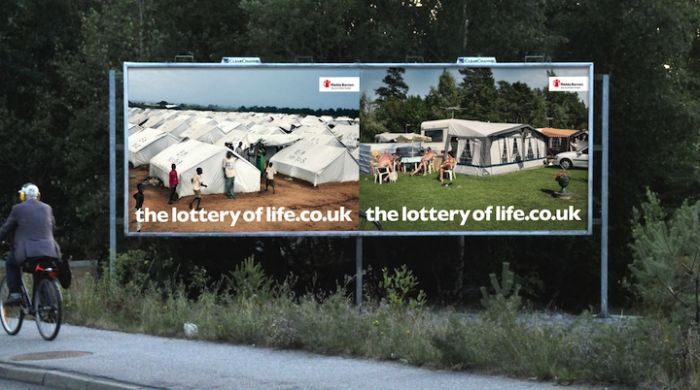 |
| The idealism of associations |
Associations represent what society has as ideals. A wide variety of associations could stand before the electorate.
Valuing associative commitment is not only about encouraging citizens to express their generosity, it is about developing groups of people who have knowledge of the field, who have experience of problems, and who know how to adapt to all new situations. It is also an opportunity for personal fulfillment and a rewarding social life.
I propose a complex method of elections, each citizen could vote according to criteria of preference. For example, by voting 3 points for the first, 2 points for the second and one point for the last choice of candidates. The more fragmented the vote, the more democratic it is. Democracy of debate is diversity. It is obvious that a large number of associations would come forward. While diversity is a very good thing in a democracy, scattering is not. Associations will have to group around major themes, if only to have a minimum of voice. Bickering and other going alone are possible, but beware of the voters! Diversity yes, but let's avoid scattering.
E. The principles of the unions.
Work is the foundation of our societies. It is from him that exchanges are created. It is this that determines the place of individuals in society. The individual is worth the work he does, the service he renders to society. This notion of work is however thwarted by a notion of ownership, which is increasingly aggressive. "We need to put the value of work back in the spotlight." The owner is content to own, and the very rich families in France have very often acceded to this title, by inheritance, transmitting their patrimony from generation to generation. The conflict between the two arises when in order to make the second profitable, the first must be devalued. These are stock market layoffs, attacks on labour rights, attacks on social services, these are staggering salaries for the managers of large companies. Some forget that work has an intrasec value.
Unions must defend citizens in their everyday lives. Whether the issues of housing or workplace rights are addressed, the unions always and tirelessly represent the citizens of workers.
Electing unions in the media is a counter-power to the powers of money. Denouncing such a company, with anti-social policies is a real power. When the CEO of Amazon, and one of the richest among the billionaires, wants his workers, to live in terror of a layoff, gives full meaning to the unions' counter-powers. It is a means to allow the great number of people to access happiness.
Should trade unionists be elected or should trade union confederations be elected? The question arises.
F. The powers for these elected officials?
They have a right of expression. They can intervene during the television news, commission documentaries or reports from journalists. I call it journalistic time. They can create TV shows, on the theme of their choice. This is the time of broadcast. Then they could benefit from a cultural budget, which they have at their disposal. They could create films, organize music festivals etc. Debate Democracy has a cultural dimension. Each elected official would benefit from journalistic time, broadcasting time and a cultural budget. They could gather them, give them to another elected official or barter them among themselves. This would give the wise real power.
G. Separation of powers between politics and the media.
Everyone has the right to choose, once, to stand as a candidate for political or media power. Under no circumstances could he or she do both and this choice involves her future. And of course this choice remains valid as long as an election in the media remains possible. I call this the separation of powers. Once this choice is consumed, it will be very difficult to change. We must divide our representatives between those who act and those who speak. It is for the good of democracy.
There are about thirty experts in the media, here in France. They are all neo-liberals and all make the same mistakes. These people will obviously be able to apply for a right of expression. But they will have to give up their links with the business community. The current elected politicians have obviously not made this choice between political and media action. They also have the right to choose once.
H. The question of hateful speech.
We have a problem in public opinion with racism and other discriminatory and toxic discourse. This is a fundamental problem that we will not solve with constitutional reform. But the laws exist, racism, anti-Semitism, homophobia, defamation etc. are excluded from the scope of freedom of expression. These are crimes. It's logical, these are forms of insults, and sometimes on the Internet we can find real calls for racist murders. This hatred must not be expressed! However, not everything is reprehensible and we cannot prevent this populism from expressing itself in a latent and underhanded way. We must ban any toxic speech of this type and end the term of office of its author, if it is a coherent speech that goes in that direction.
Any association or cultural movement can stand for election, with a cultural, social or political message. If you want to play folk music from around the world, you can. The friendship of peoples passes through music and dance. Fighting against the dictatorship of the markets is also possible. However, you have to have a certain electoral weight. This may require groupings around broad themes.
What is forbidden is relatively obvious. Anything that is insults, racist or other, incitement to violence etc.In France, in accordance with the values of secularism (1905 laws), we must remain within the framework of a secular Republic.
I. Good practices and transparency.
We must immediately move on to good practices and transparency. A first question is that of the candidates' background. If in his letter he describes his project as he wants. Journalists in the most neutral way should add a course sheet. This file would bring document the candidate's for the associations, parties, unions of which he was a member, the controversies in which he was involved and his public positions.
Of course, the candidates' resources and assets will have to be published. One issue that shocks the French is the question of luxury and the careerism shown by the elected representatives of the National Assembly and the Senate. We must be different and impose on ourselves a moderation of the allowances of elected representatives of the media. An income of €3000/month net is more than adequate with a pension capped at €2300/month net. That is to say the average (and not median) French income. Then the various advantages must be circumscribed. Only the train must be reimbursed on these trips. Staff accommodation must be the exception.
Nous devons demander aux députés et sénateurs de suivre notre exemple et de modérer les indemnités.
J. Conclusion.
I have deliberately left aside the problems of media concentration, in the ownership of a few. As well as the questions of subsidies for the press. My idea is on the one hand to impose, with the agreement of journalists' unions, editorial independence in all media. Then to elect people of culture, intellectuals, associations and trade unionists, to allow them to express themselves in the media. We need to create new counter-powers.
« Every problem has a democratic solution ». Undoubtedly most of the problems come from flaws in democratic institutions. It is by correcting the institutions that we solve these problems at the root. This is the case with the influence of the media on national elections, the bias of national politics towards neo-liberalism, and also European politics which seems to be against the general will.
We are a people of citizens, and the debate democracy will be part of the reconquest of citizens' sovereignty. The other conquest will be against the financial markets. It is appalling how they attack people who "vote badly"! If the media today are a force of dumbing down and debasement in the service of neo-liberalism. It could become a force for reflection and debate, culture and knowledge. Debate Democracy can create a vibrant and powerful democracy where citizens really take charge of themselves with a sense of responsibility.
Last modified on Saturday 27th of December 2025 at 11:01 pm