Summary of topics (links to themes, their summary and articles)
- Debate Democracy - Problems (summary)
Designated as a counter-power, the media have become the relays of the views of their owners. Subject to a logic of profit, including by lowering taxes, billionaires. They promote economic liberalism and sometimes even fascism. Superficial, emotional, for their clients, to satisfy advertisers, they can hide the real problems. To the point where public opinion feels dispossessed of their vote by the powers of money.
- Debate Democracy - Solutions (summary)
Elections in the media, with people of culture, intellectuals, associations and trade unionists. Strictly independent journalists with guaranteed editorial independence. For a true democracy!
- Debate Democracy - Exemples 1 (summary)
Democracy of debate is a right of expression, to civil society: for example, pro-LGBT atheists, intellectuals, trade unions, and human rights defenders.
- Debate Democracy - Exemples 2 (summary)
Zum Beispiel können wir uns vorstellen, uns mit einem großen Publikum, Verbänden, Ökologen, Anti-Globalisierungs-Aktivisten, zwei kulturellen und historischen Bewegungen, einer Bewegung für kulturellen Austausch, "Kunst und Kultur Frankreichs", humanitär und solidarisch, für die Verteidigung von Tieren, für Europa, eine deutsche Version von "Kunst und Kultur Frankreichs" auszudrücken und das sind nur Beispiele.
Secondary themes
- The dangers of the extrem right (summary)
The far right: Xenophobic, simplistic, demagogue, populist and profoundly idiotic parties!
- Europe and the autonomy question (summary)
Europe needs democratic reforms. It may be a bicameral parliamentary system with the pooling of national parliaments in the upper house. It must guarantee real autonomy to the Member States.
- Human face Eco-socialism (summary)
The goal of a left policy should be to change to a socialist economy. The ecological crisis is approaching fast, we must set up an after-sales service of capitalism. Lets make human face socialism and ecosocialism a reallity!
- The Author (summary)
A few lines about me, so you know who I am. I would like to explain my membership in the french LFI, the CGT, the UK green party, my feminism, my humanism, defender of human rights and my atheist activism.
Miscellaneous articles
- The British monarchy.
How the British monarchy can promote democratic and human rights values.
Main theme
Information plays an important role in any democracy. And yet 9 billionaires share most of the French media. This leads to always presenting the same experts, with the same opinions and the same answers to problems. Some find it amusing to put their merchandise at the service of and to promote fascism. This tool, essential in a democracy, becomes a simple commodity, and serves the interests of their owners, both economic and fiscal. As if freedom of the press could be bought on the stock market!
Morally intended to encourage citizens to think, the media has adopted a simple, superficial and emotive style. Their goal is to sell "available brain time". Basically, the more the citizen-consumer refrains from thinking, the more effective the ads will be. With such methods, topics of interest to citizens can be omitted. Through the play of appearances, it is possible to support and encourage ideas, which are really unpopular. Only the images count. Only the details matter. Criticism is relegated to their margins.
Isn't there a desire in France to see a social policy implemented? In any case, there is a real hostility to anti-social reforms. How is it that this desire is not translated into votes? How do voters get dispossessed of their electoral power? The expression of the general will requires good information!
To abolish the privileges of media groups, I propose debate democracy. It is a four-power democracy, with media power. Elected representatives (cultural project, intellectuals, associations and trade unionists) represent the diversity of public opinion by benefiting from a right of expression. All journalists, in all media, are strictly independent, even from their superiors. The editorial independence of all journalists must be guaranteed. Their unions must negotiate and approve it.
People around a cultural project, which by definition exists only through their role in the media, creates a living democracy. The role of intellectuals in society is to make citizens think, to share their knowledge with them. There is an idealistic dimension thanks to associations and NGOs, which can be elected. « We must put the value of work back in the spotlight »! This must be done by the unions. Too often, the social and environmental conditions of large multinationals are hidden from us. Then it allows us to hold a speech that is different from neo-liberalism and much more human.
Such a system makes it possible to make citizens think and educate, or simply to implement a project, or to defend an ideal. It would be a real counter-power, where politicians who violate their promises, or who manipulate opinion, have their image demolished. It is also a living democracy where associations can express themselves, in front of a large audience. And then it represents a real counter-power to the business community, both collectively and individually. By giving a voice to trade unionists, these companies, anti-social or anti-ecological, can have their image demolished. They are very sensitive to these kinds of problems. Real debates where all the protagonists are present and can express themselves are desirable.
If I had a wish, I would like ideas to be discussed in European universities. And are the subject of a test on ARTE.
Democracy of debate will give real democratic vitality to the countries that adopt it. It gives a voice to civil society. I would give a message of peace and friendship of the peoples. I would then address atheists and pro-LGBT. Religion, through its fundamentalists, through its intolerance, undermines the rights of LGBT peoples and peoples in general, women and proposes a sectarian vision of society. We must fight for their rights and affirm that "god does not exist".
The role of intellectuals is to make citizens think, to educate them with arguments and knowledge. Moreover, these intellectuals will be elected and represent the diversity of public opinion. We need to create real debates where citizens can form an opinion. This leads to the search for the reign of reason.
And then elected trade unionists will speak, it will be the word given by the world of work. It is a counter-power to the rich media owners. It is a counter-power to companies. The most anti-social, anti-ecological, anti-human rights risk seeing their image demolished. It is to give another dimension to the social struggle.
Finally, this page ends with an example of an association defending human rights. The idea is to create a counter-power, to make our countries exemplary in terms of human rights.
Debate democracy makes it possible to create a living democracy by giving a voice to civil society. We can imagine all kinds of associations, or cultural movements, expressing themselves with a wide audience.
Environmental associations could be active in the media. This is a topical issue, we are in the process of destroying the planet! And such associations could bring this fact to light.
The alter-globalists could act on international problems, in struggle against capitalism and finance. Two dangers for our planet.
An example of a cultural movement is "Arts and Culture of France". Defending our culture and creating international cultural exchanges allows us to foster friendship between peoples.
Of course, we must talk about the "Humanitarian and Solidarity" associations that could campaign in public for national and international solidarity.
Or "Our friends the animals", for the defense of animal welfare and biodiversity.
European policies suffer from a great opacity, "Europe and the Europeans" allows us to lift the veil and to engage Europeans in dialogue.
A cultural movement in Germany could be "Das Land Goethes". It is the German version of "Art and Culture of France".
The debate democracy allows a real vitality of democracy to express itself. No doubt more citizens will feel concerned and will get involved in cultural, associative and trade union circles. It also allows for an ambitious cultural policy with subsidies, for cinema or cultural events.
Secondary themes
 |
|
Unfortunately, the far right is making significant electoral scores, and permeating the French political landscape. He aspires to power, so it is legitimate to look at what he is. To understand its impact, its program, its way of thinking, you have to look it straight in the eye. It is a racist party, with references to fascism and Nazism. It is a hypocritical party on its social program. Seeking to monopolize all voters and supporters, he diverts popular aspirations from social policies to the benefit of xenophobic policies. In this he is a very good agent of big capital, a dirty and narrow-minded watchdog of the system. He seeks to capture voters with a simplistic, demagogic and populist discourse. These are aggressive speeches devoid of any intelligence, everything is good to capture votes. The general interest has no place in these speeches. To really understand who he is, you have to dissect his way of thinking, a way of expressing his aggressiveness. It is the sign of a troubled, disturbed thought. But perhaps the most striking trait of the extreme is this aspiration to think as little as possible and this difficulty in thinking things correctly, in moving in the right direction.
 |
|
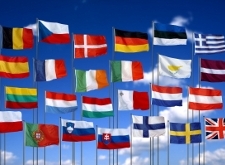
Europe needs democratic reforms. A real democracy allows the left to carry out its policies with a simple majority, all this in the respect of human rights. What would they be? I consider myself an autonomist, neither a federalist nor a sovereignist. I want to unite while cultivating our differences. We must reject blocking rights at the national level. This includes all vetoes, including the veto of the Member States within the Council. In exchange, each national parliament would receive individual and collective rights. As for individual rights, a national parliament, on a project on which it disagrees, has the right to seek a compromise, while at the same time exerting pressure by delaying this project. As collective rights, the national parliaments, with the same electoral weight, for each nation, would form an assembly of nations. That is to say, an upper house in a bicameral European parliament. Procedures are also needed to ensure real autonomy for all Member States. With an autonomist majority in this House, it would be able to monitor the fact that the rights of national parliaments have been rigorously taken into account. The best thing to do is to write a constitution that creates a parliamentary regime that could actually legislate in the ecological, social and fiscal fields. An ambitious cultural exchange policy, which brings people together, while affirming their diversity, would be a good thing. It could either be written by a constituent assembly or by the European Parliament and be ratified by the Member States within 10 years. I think that a commission that is too strong would be a bad thing. Parliament is a much more democratic institution. It will take a compromise or consensus (even better) with the federalists on this subject. We must warmly welcome Ukraine to the Union, as well as to NATO.
If I had a wish, I would like these ideas to be discussed in European universities and on ARTE. I am also a member of the radical left movement, which wants a Democratic Europe, DIEM25.
to complete.
My name is James Manley, of Franco-British nationality, I am a dual national, some people don't like it. I wanted to explain my political and trade union background to french France Insoumise and the CGT, as well as to the Greens of England and Wales. I am a feminist, humanist, human rights defender and atheist activist.
Miscellaneous articles
The British monarchy
I might be a French republican. The paradox is that, due to different history and culture, the republic is to French democracy, what the monarchy is to British one. I believe that the British monarchy should play an active role in promoting democratic and human rights values. It should intervene in media to create debates, to explain and inform on democratic and human rights issues. Obviously, it should have the constitutional responsibility to guarantee these rights in the UK and should intervene when they are damaged or scratched. Being a French with a touch of patriotism, I understand that this democratic idea would please the British patriots.
By continuing browsing on our site, you accept the use of cookies to secure your connection, facilitate browsing, offer you adapted offers and allow the elaboration of statistics.
Information on cookies and parameterisation, click here.
Last modified on Saturday 02th of August 2025 at 08:14 pm